Choose timezone
Your profile timezone:
Join us for the 3rd Accelerator Middle Layer Workshop!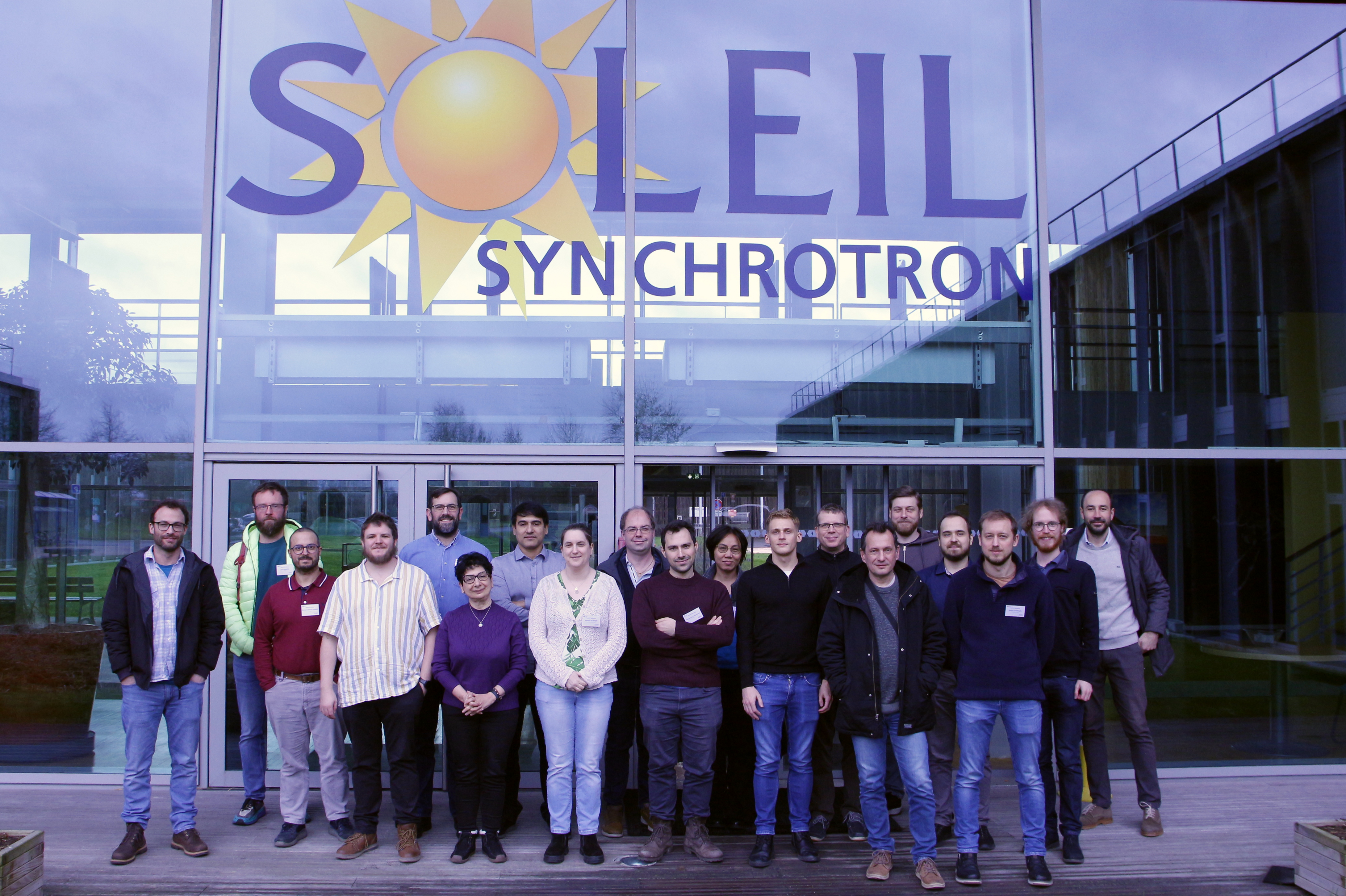
Python Accelerator Middle Layer (pyAML) is a joint technology platform for design, commissioning and operation of particle accelerators.
It is developed, benchmarked and maintained collaboratively by an open-source community driven by accelerator facilities around the world.
2nd Accelerator Middle Layer Workshop - 12-14 February 2025 - Berlin, Germany
Accelerator Middle Layer Workshop - 19-21 June February 2024 - Hamburg, Germany
The core component of this pyAML workshop edition will be a hackathon --- collaborative development of pyAML use cases (such as beam-based alignment (BBA), etc.) in small working groups.
We are looking forward to welcoming you at the Synchrotron SOLEIL, near Paris, France!
The code repositories (of the prototypes) are hosted on GitHub.
Meeting agendas and minutes are available on GitHub. Also, other documents related to governance can be found there.
The specification is currently under development. It is written collaboratively on Overleaf. Feel free to comment and make suggestions!
Requirement Specification: https://www.overleaf.com/6632675387jrmgtdnzbxhq#b3b3c5
In the beginning of each document is a description of the purpose of the document.
Welcome message that includes
Report on the pyAML project status since the last workshop in Berlin. Progress on specification documents and the pyAML product is reported. The technical / software side will be covered in another contribution.
Report on the pyaml-repository development progress, including control system interfaces implemented in separate repositories tango-pyaml and pyaml-cs-oa. The report includes
Report on the accml-repository development progress.
Python version of the Simulated Commissioning toolkit for synchrotrons (inspired by a Matlab code by T. Hellert (LBNL) https://github.com/ThorstenHellert/SC), developed at DESY (https://github.com/kparasch/pySC) originally by L. Malina and continued by K. Paraschou.
A session dedicated to preparation for the hackathon on the next day. The goals of the session is to get a working pyAML environment/environments for all participants, to run some existing examples, etc.
Preparatory session dedicated to verifying that everyone has a working environment set up, introducing developer documentation and planning of different working groups for the next day.
Demonstration of pyAML prototype in the SOLEIL control room. A simple use case of measuring chromaticity will be shown and compared with the Matlab Middle Layer (MML) option used in operation. Depending on the number of participants, we will split them into several groups.
This is a session dedicated to trying out pyAML existing examples. The aim of the session is for people to get updated on the prototype development and to give their feedback on the progress that have been made so far. In this hackathon session, all working groups will be working on the same global task of trying out the prototype.
Description
The working group session will be dedicated to trying out the existing use cases and examples in order to provide their feedback.
Composition
Alexandre Moutardier (SOLEIL)
Stefano Krecic (ELETTRA)
Sebastian Niekrasz (ELI)
Simon White (ESRF)
Ali Al-Sakeeri (MAX IV)
Input
Objectives and deliverables
Description
The working group session will be dedicated to trying out the existing use cases and examples in order to provide their feedback.
Input
Objectives and deliverables
Description
The working group session will be dedicated to trying out the existing use cases and examples in order to provide their feedback.
Input
Composition
Patrick Madela (SOLEIL)
Teresia Olsson (HZB)
Laurent Nadolski (SOLEIL)
Gayane Amatuni (CANDLE)
Murat Torun (ELI)
Objectives and deliverables
Description
The working group session will be dedicated to trying out the existing use cases and examples in order to provide their feedback.
Composition
Alexis Gamelin (SOLEIL)
Konstantinos Parashou (DESY)
Ivan Morozov (ELETTRA)
Simone Maria Liuzzo (ESRF)
Julian Gethmann (KIT)
Input
Objectives and deliverables
Description
The primary aim of this working group is to discuss handling of unit conversion in pyAML (Ampere to strength unit; simple conversion mm to m; strength to integrated strength, etc)
Input
Implementation in PAMILA code
Pint package (https://pint.readthedocs.io/en/stable/)
Existing implementations in accml and pyaml
Design pattern from accml
Objectives and deliverables
- Update to the documentation regarding the unit conversion
- GitHub discussion or issue describing the proposal
- Draft pull request (PR) with implementation suggestion
Description
The working group session will be dedicated to trying out the existing use cases and examples in order to provide their feedback.
Composition
Alexandre Moutardier (SOLEIL)
Stefano Krecic (ELETTRA)
Sebastian Niekrasz (ELI)
Simon White (ESRF)
Ali Al-Sakeeri (MAX IV)
Input
Objectives and deliverables
Description
The working group session will be dedicated to trying out the existing use cases and examples in order to provide their feedback.
Input
Objectives and deliverables
Description
The working group session will be dedicated to trying out the existing use cases and examples in order to provide their feedback.
Input
Composition
Patrick Madela (SOLEIL)
Teresia Olsson (HZB)
Laurent Nadolski (SOLEIL)
Gayane Amatuni (CANDLE)
Murat Torun (ELI)
Objectives and deliverables
Description
The working group session will be dedicated to trying out the existing use cases and examples in order to provide their feedback.
Composition
Alexis Gamelin (SOLEIL)
Konstantinos Parashou (DESY)
Ivan Morozov (ELETTRA)
Simone Maria Liuzzo (ESRF)
Julian Gethmann (KIT)
Input
Objectives and deliverables
Description
The primary aim of this working group is to discuss handling of unit conversion in pyAML (Ampere to strength unit; simple conversion mm to m; strength to integrated strength, etc)
Input
Implementation in PAMILA code
Pint package (https://pint.readthedocs.io/en/stable/)
Existing implementations in accml and pyaml
Design pattern from accml
Objectives and deliverables
- Update to the documentation regarding the unit conversion
- GitHub discussion or issue describing the proposal
- Draft pull request (PR) with implementation suggestion
A visit of SOLEIL II prototypes (magnets, diagnostic devices, etc.)
This is a session dedicated to trying out pyAML existing examples. The aim of the session is for people to get updated on the prototype development and to give their feedback on the progress that have been made so far. In this hackathon session, all working groups will be working on the same global task of trying out the prototype.
Description
The main idea of this working group is to try implementing some new use case (for example, a chromaticity tuning tool).
Composition
Alexandre Moutardier (SOLEIL)
Stefano Krecic (ELETTRA)
Sebastian Niekrasz (ELI)
Simon White (ESRF)
Ali Al-Sakeeri (MAX IV)
Input
- pyaml/accml examples
- pyaml/accml documentation
- specification documents
Objectives and deliverables
- Discuss among yourselves what kind of measurement / tuning tool is already possible to do with the existing code base
- Make a GitHub issue(s) describing what you want to implement
- Make a short description of the measurement in the specification document
- A working measurement script / tuning tool for a selected use case(s),
- Draft pull request with a new measurement/tuning tool (partially) implemented
- Short presentation (5 - 10 minutes) on the work done so far
- Feedback on the experience of implementing a use case (GitHub discussion)
Description
The aim of the working group will be the merge of accml and pyaml repositories into one.
Composition
Guillaume Pichon (SOLEIL)
Vadim Gubaidulin (SOLEIL)
Waheedullah Sulaiman Khail (HZB)
Jean-Luc Pons (ESRF)
Ilya Agapov (DESY)
Objectives and deliverables
Description
One potential future development path for pyAML is to build a software ecosystem. The idea is that instead of having a single package having a set of compatible packages where facilities can choose which ones they want to use or even develop their own package to add to the ecosystem. The working group should brainstorm how such an ecosystem could look like and come up with a suggestion for the next steps in case the collaboration decides to go in this direction.
Composition
Patrick Madela (SOLEIL)
Teresia Olsson (HZB)
Laurent Nadolski (SOLEIL)
Gayane Amatuni (CANDLE)
Murat Torun (ELI)
Input
Objectives and deliverables
A figure showing the different parts in the ecosystem and how they are connected.
A suggestion for how the existing packages can be restructured to facilitate the ecosystem development. What needs to be in a common core, what needs to be more modular, what can be separated out into separate repositories etc.
Initial description of the interfaces between packages and an example showing how that can be implemented.
Description
The primary objective of the working group is to establish a pyAML standard for performing measurements. In general, there are two ways to do measurements: simple measurement scripts and a more generic way for standard measurements. The generic way can allow for the reuse of existing code snippets in a transparent way and orchestrate a complex measurement. Both ways exist in the PAMILA toy project of Y.Hidaka, including OPTIONAL compatibility with BlueSky. The working group can brainstorm how to adapt this solution or come up with a different one.
Composition
Alexis Gamelin (SOLEIL)
Konstantinos Parashou (DESY)
Ivan Morozov (ELETTRA)
Simone Maria Liuzzo (ESRF)
Julian Gethmann (KIT)
Input
- User interface specification document (Chapter 6)
- Implementation in the PAMILA code (https://github.com/NSLS2/pamila)
Objectives and deliverables
- Update on the documentation relating to generic measurements
- Proposal of a generic way to do measurements (preferably in the form
of GitHub discussions)
- A code example with one of the already existing use cases done in
both ways
- Short presentation (~10 minutes) elaborating on the points above
Description
The primary aim of this working group is to discuss handling of unit conversion in pyAML (Ampere to strength unit; simple conversion mm to m; strength to integrated strength, etc)
Input
Implementation in PAMILA code
Pint package (https://pint.readthedocs.io/en/stable/)
Existing implementations in accml and pyaml
Design pattern from accml
Objectives and deliverables
- Update to the documentation regarding the unit conversion
- GitHub discussion or issue describing the proposal
- Draft pull request (PR) with implementation suggestion
This is a session dedicated to trying out pyAML existing examples. The aim of the session is for people to get updated on the prototype development and to give their feedback on the progress that have been made so far. In this hackathon session, all working groups will be working on the same global task of trying out the prototype.
This is an optional hackathon session for steering committee members if they wish to have some discussion before the last day of the workshop. The aim of the session could be, for example, the following:
Description
The main idea of this working group is to try implementing some new use case (for example, a chromaticity tuning tool).
Composition
Alexandre Moutardier (SOLEIL)
Stefano Krecic (ELETTRA)
Sebastian Niekrasz (ELI)
Simon White (ESRF)
Ali Al-Sakeeri (MAX IV)
Input
- pyaml/accml examples
- pyaml/accml documentation
- specification documents
Objectives and deliverables
- Discuss among yourselves what kind of measurement / tuning tool is already possible to do with the existing code base
- Make a GitHub issue(s) describing what you want to implement
- Make a short description of the measurement in the specification document
- A working measurement script / tuning tool for a selected use case(s),
- Draft pull request with a new measurement/tuning tool (partially) implemented
- Short presentation (5 - 10 minutes) on the work done so far
- Feedback on the experience of implementing a use case (GitHub discussion)
Description
The aim of the working group will be the merge of accml and pyaml repositories into one.
Composition
Guillaume Pichon (SOLEIL)
Vadim Gubaidulin (SOLEIL)
Waheedullah Sulaiman Khail (HZB)
Jean-Luc Pons (ESRF)
Ilya Agapov (DESY)
Objectives and deliverables
Description
One potential future development path for pyAML is to build a software ecosystem. The idea is that instead of having a single package having a set of compatible packages where facilities can choose which ones they want to use or even develop their own package to add to the ecosystem. The working group should brainstorm how such an ecosystem could look like and come up with a suggestion for the next steps in case the collaboration decides to go in this direction.
Composition
Patrick Madela (SOLEIL)
Teresia Olsson (HZB)
Laurent Nadolski (SOLEIL)
Gayane Amatuni (CANDLE)
Murat Torun (ELI)
Input
Objectives and deliverables
A figure showing the different parts in the ecosystem and how they are connected.
A suggestion for how the existing packages can be restructured to facilitate the ecosystem development. What needs to be in a common core, what needs to be more modular, what can be separated out into separate repositories etc.
Initial description of the interfaces between packages and an example showing how that can be implemented.
Description
The primary objective of the working group is to establish a pyAML standard for performing measurements. In general, there are two ways to do measurements: simple measurement scripts and a more generic way for standard measurements. The generic way can allow for the reuse of existing code snippets in a transparent way and orchestrate a complex measurement. Both ways exist in the PAMILA toy project of Y.Hidaka, including OPTIONAL compatibility with BlueSky. The working group can brainstorm how to adapt this solution or come up with a different one.
Composition
Alexis Gamelin (SOLEIL)
Konstantinos Parashou (DESY)
Ivan Morozov (ELETTRA)
Simone Maria Liuzzo (ESRF)
Julian Gethmann (KIT)
Input
- User interface specification document (Chapter 6)
- Implementation in the PAMILA code (https://github.com/NSLS2/pamila)
Objectives and deliverables
- Update on the documentation relating to generic measurements
- Proposal of a generic way to do measurements (preferably in the form
of GitHub discussions)
- A code example with one of the already existing use cases done in
both ways
- Short presentation (~10 minutes) elaborating on the points above
Description
The primary aim of this working group is to discuss handling of unit conversion in pyAML (Ampere to strength unit; simple conversion mm to m; strength to integrated strength, etc)
Input
Implementation in PAMILA code
Pint package (https://pint.readthedocs.io/en/stable/)
Existing implementations in accml and pyaml
Design pattern from accml
Objectives and deliverables
- Update to the documentation regarding the unit conversion
- GitHub discussion or issue describing the proposal
- Draft pull request (PR) with implementation suggestion
A session dedicated to feedback from the hackathon and discussion of the pyAML project objectives.
Discussion, feedback and showcase on the prototype features and architecture based on the working groups' results. Each group will present what they have been working on, what issues they have encountered and what they want to see improved.
Each working group will have time to provide feedback on the pyAML prototype and present the topical proposal they were working on during the afternoon sessions of the Hackathon. For all discussed topics a GitHub discussion should be created by the group, so that the discussion can continue online, after the workshop and with a wider pyAML community involved.
Broader discussion on the priorities and next objectives for the next years of pyAML collaboration. The aim is to discuss medium (6-12 months) and long-term goals (12-24 months) of pyAML. The outcome/minutes of this discussion will be used as input for the steering committee to define a roadmap for the project. Feedback on the work organisation should be given in this session. Possible points to discuss: